
Start Date
2024 -
Supporting Organization
TÜBİTAK 1002-A Rapid Support Program
Project Status
continues
Let it be Project
Project Manager
Project Coordinator
Project Team
Emre Keskin , Sedat Sevin
Partners / Collaborations
The project aims to support traditional biodiversity monitoring techniques by enabling faster and more accurate species identification, thereby contributing to the development of strategies for biodiversity conservation.
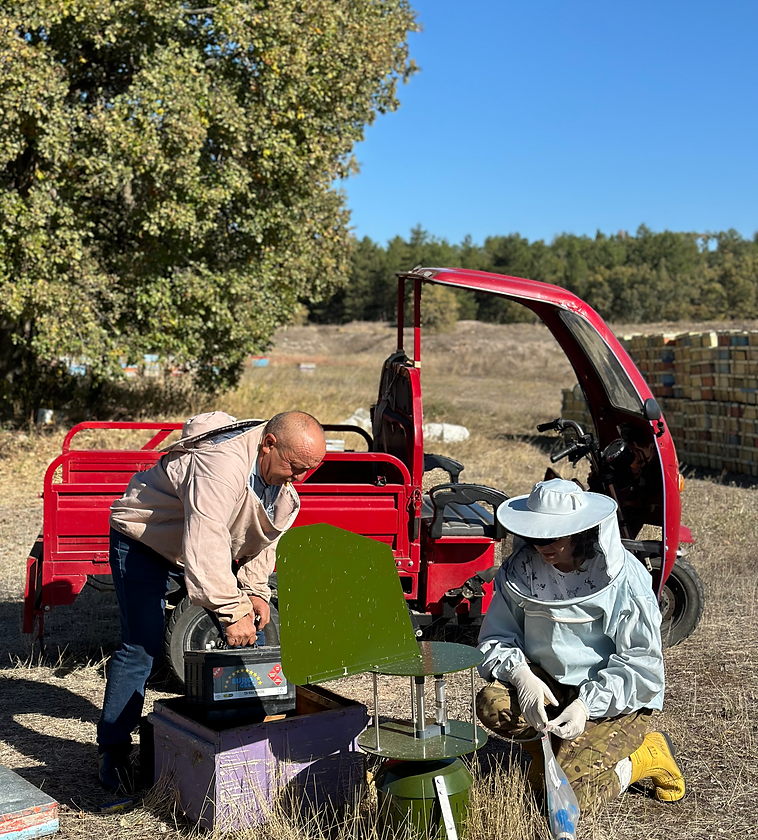
Three main materials are used as sources of environmental DNA: airborne DNA (eDNAir), pollen, and honey. This innovative approach aims to understand the richness of nature more effectively and to protect biodiversity, while also improving food security.
The conservation and sustainable management of natural ecosystems is among the most pressing challenges facing scientists today. While traditional biodiversity monitoring and plant species identification methods are effective, they are often time-consuming and costly. In this context, an innovative approach has been developed to assess plant biodiversity more quickly and accurately using airborne environmental DNA metabarcoding. Based on the hypothesis that airborne environmental DNA can be a powerful tool in identifying plant biodiversity, this study aims to identify existing plant species by analyzing DNA fragments in the air and to offer a valuable complementary approach to traditional biodiversity monitoring techniques. This new technique has the potential to accelerate species identification, increase accuracy, and improve the overall efficiency of biodiversity studies.
Pollen plays a vital role in plant reproduction and not only signals the presence of plants but can also map the genetic profile of the ecosystem in which it is found. In this study, pollen samples are collected and the biodiversity in the environment is analyzed. Each pollen grain offers valuable clues about which plants are found where and provides information about the health of nature.
Honey contains genetic information about the environment, along with pollen collected by honeybees. This means that honey is a source of environmental DNA. The DNA found in honey provides extensive information about the plants in the region where it is produced, and by analyzing it through metabarcoding, it is possible to reveal the geographical region where the honey was produced, the plant diversity, and even the purity of the honey. This contributes to improving food traceability and quality.
Furthermore, eDNA obtained from air samples offers new opportunities for large-scale biodiversity research and could revolutionize the monitoring and conservation of plant species. This method could enable studies on medicinal and aromatic plants and be used to detect adulteration in plant-based foods.
In conclusion, this study will not only provide a workflow for the molecular characterization of terrestrial plant biodiversity, but will also contribute to the updating and conservation of species lists that are important for national biosecurity. As the first airborne environmental DNA study conducted in Türkiye, it is expected to make a significant contribution to the scientific literature.
Furthermore, the project titled "Airborne DNA (eDNAir) Metabarcoding in the Taxonomic Identification of Environmental Samples," which includes only a part of this study, has been awarded funding through the TÜBİTAK 1002-A Rapid Support Program.


